

Take a short but scenic ride through central Arkansas as we follow an older alignment of Arkansas Highway 89 from Mayflower to Lollie—a route that has since been rerouted in its eastern half. This 4-mile stretch offers a glimpse into the quieter side of Faulkner County, where winding country roads and small-town landmarks meet the edge of the Arkansas River Valley.
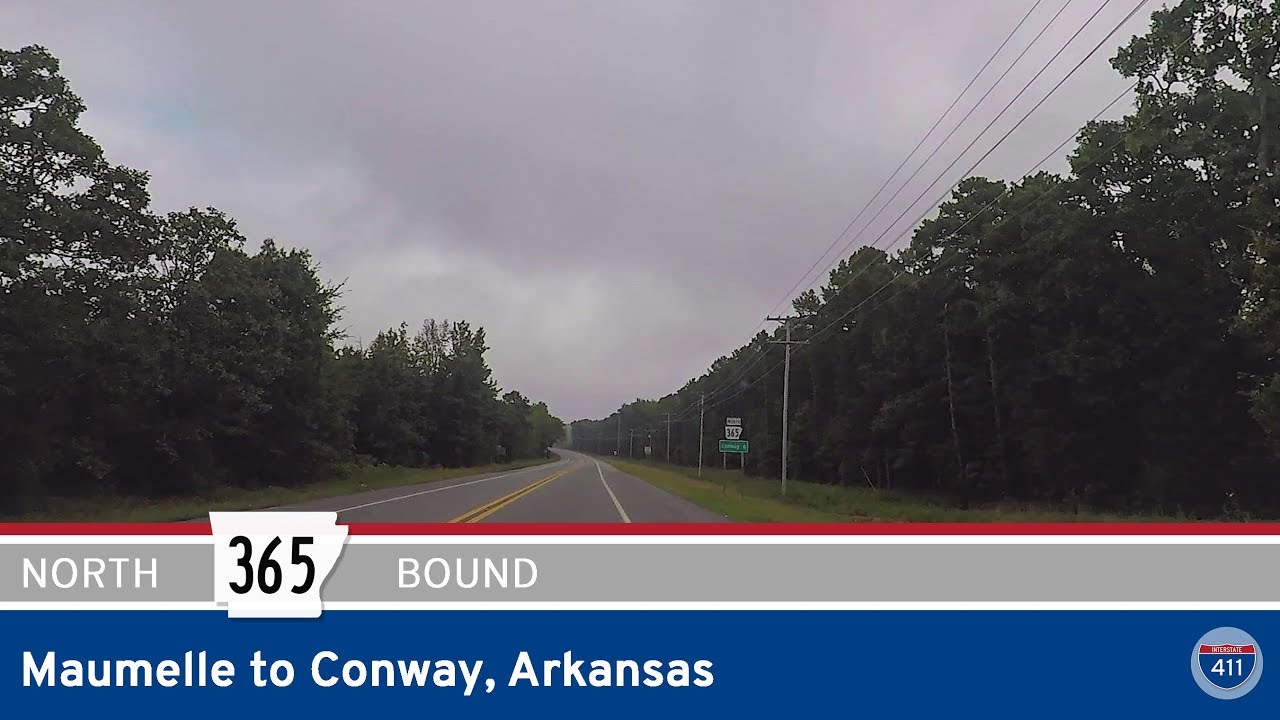
We begin our journey in downtown Mayflower, turning west from Arkansas Highway 365 onto the former routing of AR-89. At the time of this video, this alignment carried Highway 89 west through the heart of town, a path now partially replaced by a newer bypass further north. Almost immediately, we make a slight dogleg to the north, skirting a small cemetery tucked behind the railroad tracks. As we pass the last few blocks of town, the landscape quickly begins to open up, trading commercial storefronts for open lots and scattered homes. Just beyond the city limits, we cross Beaverdam Creek, its wooded banks giving us our first taste of the rural scenery to come.

From here, the route gently curves northwest through a patchwork of fields, tree lines, and occasional homesteads. This part of the drive feels deeply rooted in the rhythms of Arkansas backroads—quiet, steady, and comfortably familiar. Just past the shimmering waters of Stone Lake, the official designation of AR-89 ends at what was, at the time, its northern terminus. Although the state highway ends here, our journey continues just a bit further along the same roadway, now unsigned, as we make our way to the intersection with Rocky Gap Road, which marks the continuation of the Arkansas River Trail. The video concludes at this junction, offering a natural transition point for those continuing north along the riverside byway.
Today, much of this alignment has been modified or bypassed by newer infrastructure. The current route of Highway 89 now follows a straighter path in Mayflower, designed to accommodate heavier traffic and regional connectivity. But in this video, we experience the road as it once was—a slower-paced, community-rooted corridor that still carries echoes of its past purpose. Watching this segment now offers both a snapshot of Arkansas transportation history and a reminder of the evolving nature of rural travel routes.
🗺️ Route Map


0 Comments